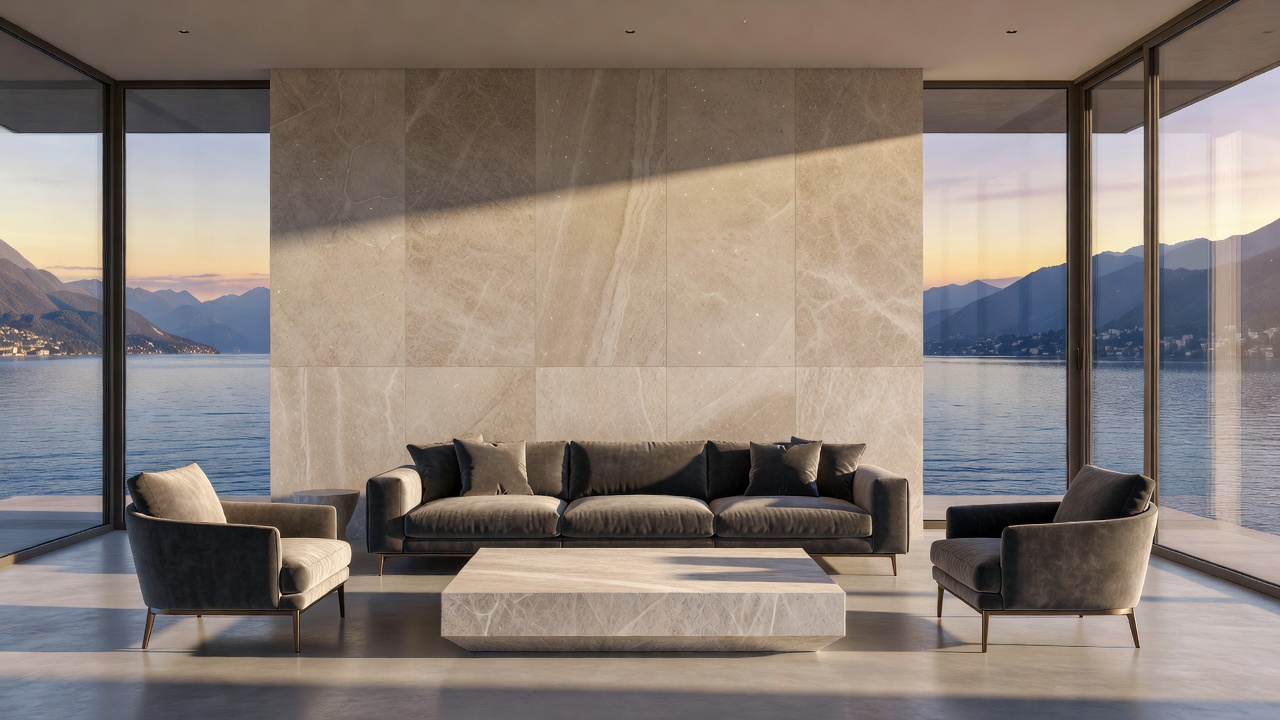
In contemporary architectural discourse, minimalism is frequently misunderstood as an exercise in cold subtraction—a sterile void constructed from plasterboard and painted white to simulate austerity. At Depotlistripple, we operate from the antithetical conviction: true minimalism is not an absence of detail, but the radical celebration of weight, texture, and silence.
The Primacy of the Hand over the Eye
For centuries, Western architecture prioritized visual symmetry and ocular delight. However, human neurology responds far more profoundly to tactile encounters. When an inhabitant steps onto a floor carved from cross-cut Tivoli travertine, the slight thermal conductivity of the stone registers through the soles of the feet. When a door handle is forged from massive cast bronze rather than hollow plated aluminum, its gravitational mass conveys permanence and safety.
"When visual noise is stripped away, the volume of material truth is turned up. A single unpolished stone surface speaks louder than a room adorned with gilded moldings."
Acoustics as an Invisible Material
One of the greatest luxuries in modern urban life is acoustic stillness. In standard residential architecture, hard polished surfaces create flutter echoes and cognitive fatigue. By preserving the natural open vacuoles within Roman travertine and pairing them with micro-perforated acoustic timber paneling, sound reflections are absorbed naturally. The room itself breathes with an almost monastic hush.
The Ethics of Patina
Modern synthetic luxury products are designed to look pristine on day one and deteriorate into plastic waste after a decade. In contrast, authentic materials—untreated oak, unsealed bronze, porous limestone—possess what the Japanese term wabi-sabi and European classicists called patina. They absorb the sunlight, the oils of resting hands, and the atmospheric moisture of seasons, gaining character and value with every passing generation.